
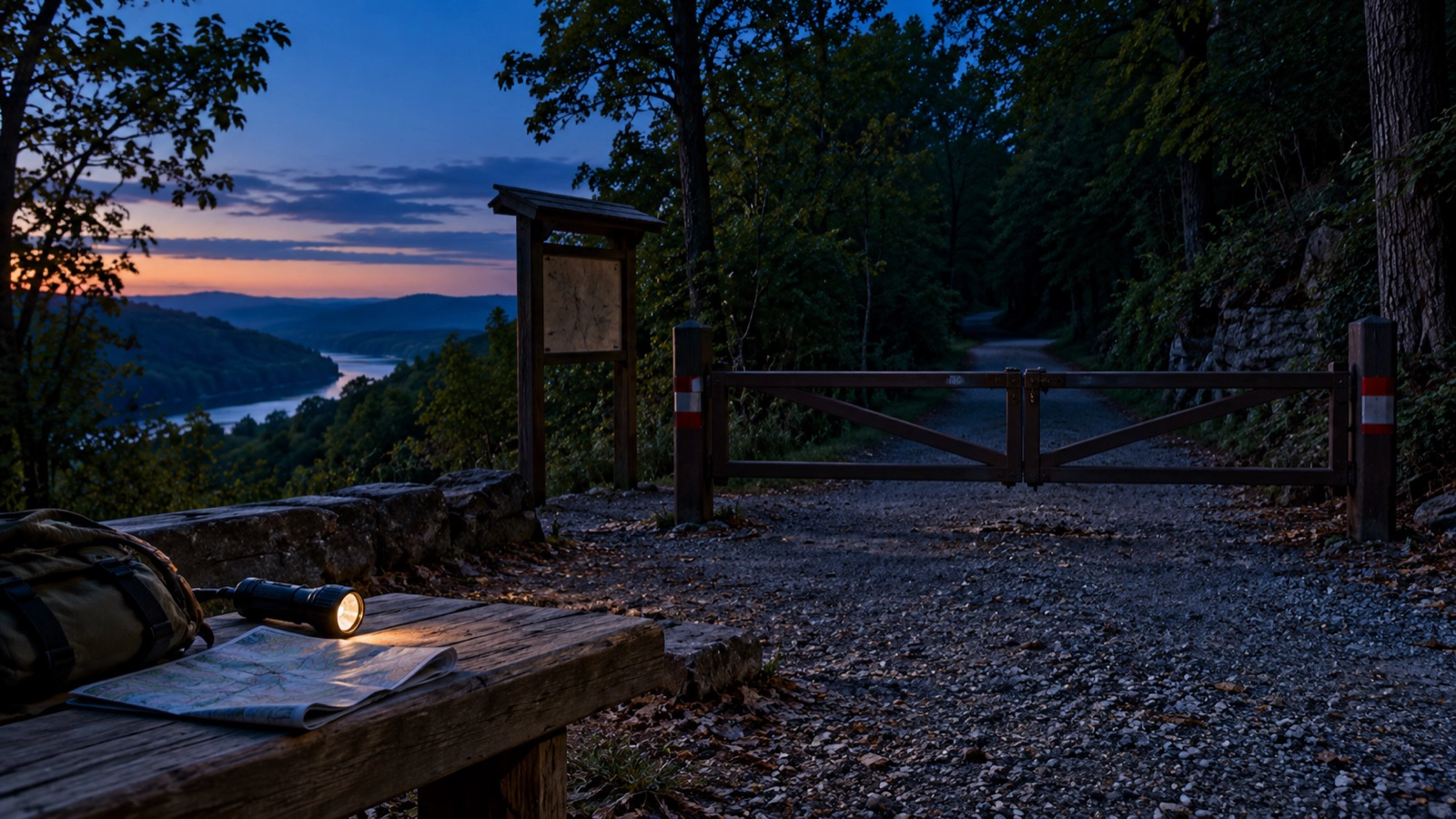
Kentucky Trails After Dark: Rules, Risks, and Better Alternatives
A dark Kentucky trail can turn an owl call, a bend in the path, or another hiker’s headlamp into a story before anyone reaches the parking lot. That is part of the pleasure of campfire folklore. It is not permission to remain on a trail after its managing agency closes it.
The legend-trip pattern
Many “haunted trail” accounts follow the same sequence: friends choose a place already rumored to be strange, arrive near dusk, interpret an uncertain sound or light through that expectation, and retell the trip with the location’s reputation attached. Folklorists call this kind of visit a legend trip. The experience can reinforce a story even when nothing in it establishes a paranormal cause.
Kentucky versions attach themselves to wooded park paths, cemetery approaches, old roads, railroad grades, and overlooks. The exact apparition changes, but the ritual is stable: go late, cross a boundary, call a name, switch off a light, or wait for a signal. That repetition is useful evidence about the folklore form—not about a ghost.
“Public land” does not mean open all night
Kentucky State Parks says park trails close at dark. Individual parks, nature preserves, city parks, and federal recreation areas may set different hours, seasonal closures, permit rules, or emergency restrictions. A campground reservation also does not automatically authorize nighttime access to every nearby trail.
Daniel Boone National Forest contains roads, developed recreation sites, wilderness, private inholdings, and trails with different conditions. Visitors should check the current forest or ranger-district notice for the specific destination. During hunting seasons, night travel can also overlap with lawful activities that have their own rules.
Better ways to experience night folklore
Choose an authorized ranger walk, astronomy program, campground program, commercial tour, or site event that expressly operates after dark. If an open route permits night use, carry a primary light and backup, tell someone the route and return time, download the map, and turn around before uncertainty becomes an emergency. Do not use “ghost hunting” as a reason to block a road, approach a home, enter a cemetery after posted hours, or frighten other visitors.
For writers and storytellers, the best research often happens in daylight: record the path, landscape, known wildlife, and official history, then interview narrators about when they first heard the story. The result is richer than a generic list of supposedly haunted trails because it shows how place and expectation create the experience.
Sources and further reading




About the Author: Kantuckee


