
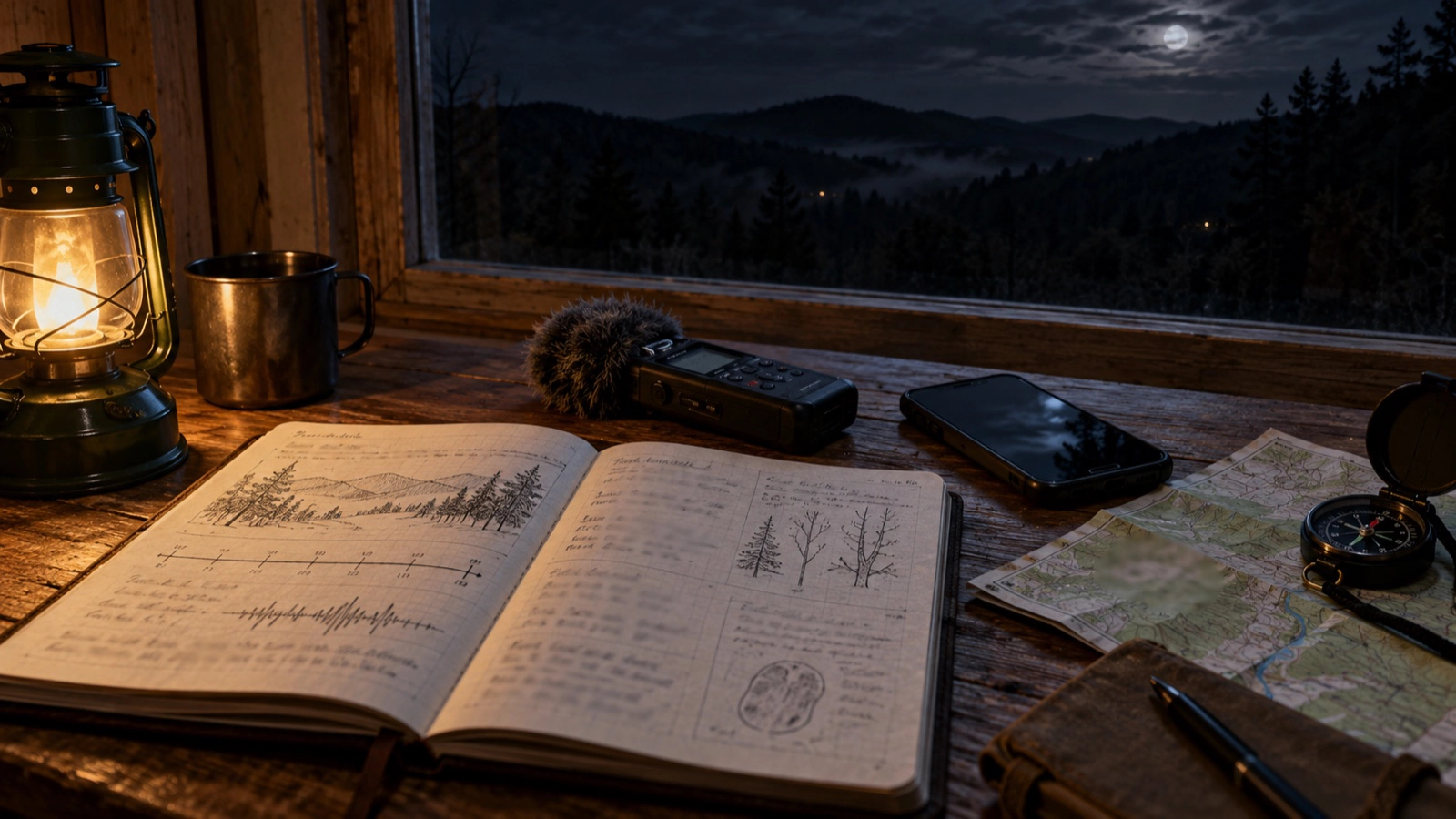
Kentucky Night-Encounter Stories: How to Document What Happened
A night encounter becomes folklore the moment it is retold, but it can still be documented well. The goal is not to pressure a witness into choosing between “ghost” and “mistake.” It is to preserve what the person experienced, what the surroundings can establish, and what remains unknown.
Write the first account before comparing stories
Record the witness’s own sequence in their own words. Note the date, start and end time, general location, direction of travel, light sources, weather, distance, duration, and who else was present. Ask what the witness saw, heard, or felt before asking what they think it was. Leading questions can quietly supply details that were not in the original memory.
Save the earliest text message, voice note, sketch, or photograph. Later retellings may be more polished but less independent. If two people shared the event, collect their accounts separately before they compare memories.
Build a source packet
Keep the original media file, not only a screenshot posted to social media. Record the device and whether night mode, zoom, stabilization, filters, or editing were used. For a sound, capture several minutes of the ordinary environment as well as the unusual moment. Weather observations and sunrise, sunset, or moon information can be checked later against dated government records.
A map should be precise enough for analysis but not expose a private residence, grave, fragile cave, or archaeological site. Separate the internal research location from the public description. Obtain permission before publishing a witness’s name or identifiable voice.
Label the evidence honestly
- Documented: a verifiable time, public place, record, or unaltered file.
- Attributed: what a named or consenting witness says happened.
- Interpretation: an explanation proposed by the witness, investigator, or writer.
- Unresolved: a detail the available material cannot identify.
“Unresolved” does not mean supernatural. It means the record is insufficient. A distant animal call, moving vehicle light, condensation, fatigue, or expectation may fit without being provable. The honest conclusion can preserve the mystery and still protect the reader from a false certainty.
Turn a report into responsible folklore
After documenting the event, compare it with older local versions. Which details were already circulating? Which appeared only after a video, tour, or news story? That comparison shows how Kentucky encounter traditions grow. It also keeps one frightened person from being treated as a spectacle.
Sources and further reading




About the Author: Kantuckee


