
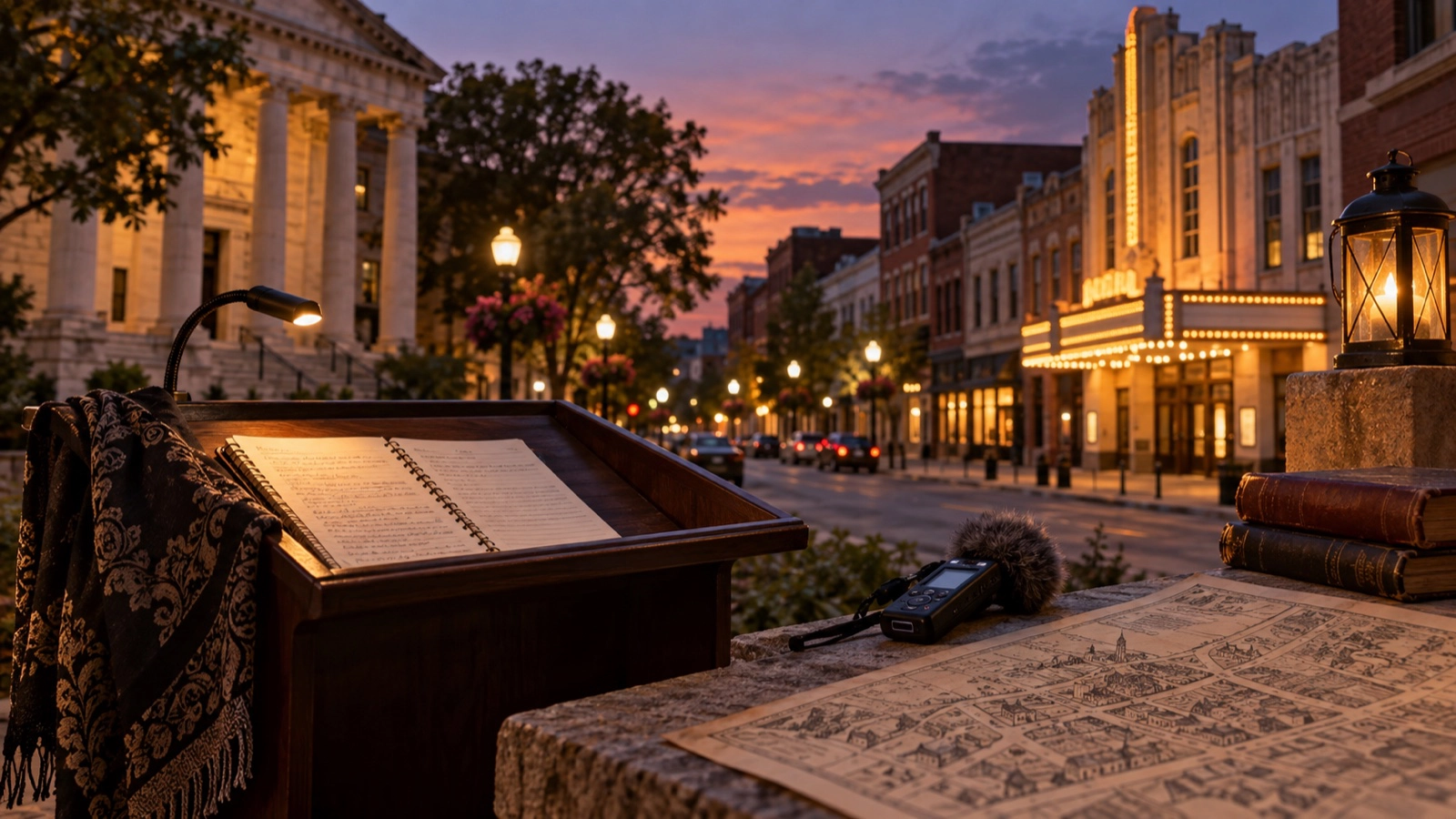
Patti Starr and Lexington Ghost Tourism: Local Folklore in Context
Patti Starr’s importance to Kentucky folklore is not that she “proved” Lexington is haunted. It is that she helped turn paranormal investigation, walking tours, lectures, books, and local-history storytelling into a recognizable part of the region’s visitor culture.
From investigator to interpreter
Starr describes decades of ghost-hunting experience and founded Ghost Chasers International in Lexington. A 2008 profile discussed the recorders, cameras, thermometers, and electromagnetic-field meters used by her group. She later published Ghosthunting Kentucky, a guide to thirty places, and continued speaking, blogging, leading tours, and organizing investigations.
Those activities create several kinds of source. A book or tour records what Starr and her participants say they experienced. A device records a sound, image, temperature, or field reading. A deed, newspaper, death certificate, or historic-site file documents a person or building. One source type does not automatically prove the claims of another.
Lexington as a tour landscape
Downtown Lexington offers a compact set of historic settings: the Kentucky Theatre, the old courthouse area, Gratz Park, Transylvania University, and nearby house museums. Their documented age, public events, and architectural details give a guide material before any ghost is introduced. Starr’s storytelling helped connect those places into a night-tour route and encouraged audiences to hear local history through reported encounters.
Current ghost-tour offerings may be operated by other companies, and schedules and ownership can change. A historical profile of Starr should not imply that she currently leads every tour associated with her name or that an older listing remains active. Readers should confirm the present operator, route, accessibility, duration, and refund policy before booking.
Influence and evidence
Starr’s legacy can be evaluated through published books, archived event notices, interviews, recorded lectures, tour materials, and the investigators she trained or inspired. Claims about a particular ghost still require their own source trail. The respectful approach is to credit her version, compare it with the site’s documented history, and state what remains interpretation.
That distinction does not diminish ghost tourism. It explains its cultural role: tours bring people into historic streets, give buildings memorable characters, and create a shared performance between guide and audience. The experience is entertainment and community folklore, not a substitute for archival proof.
Sources and further reading




About the Author: Kantuckee


