
The Louisville ‘House on the Hill’ Video: What Can Be Verified
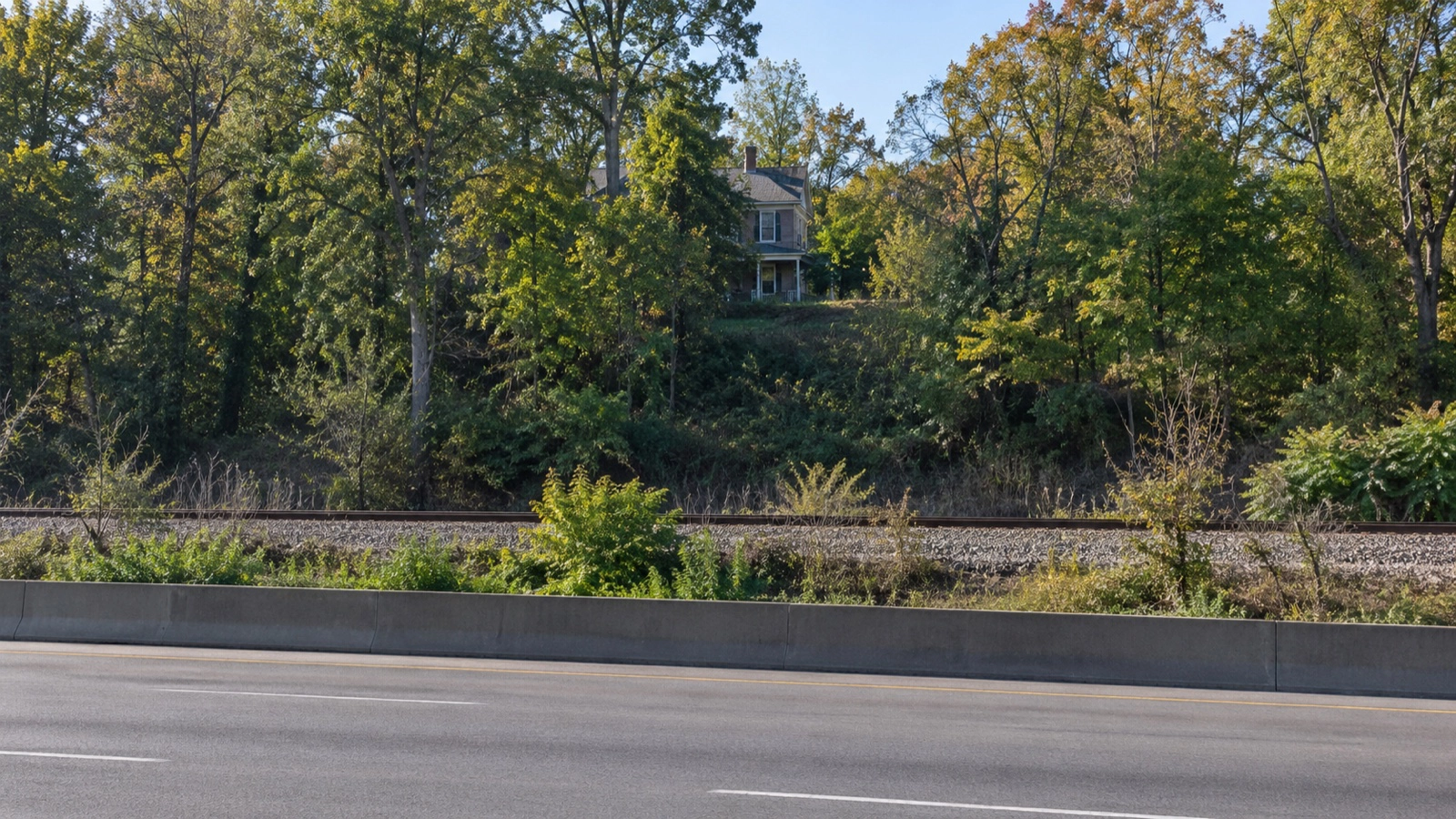
A 2017 urban-exploration video shows a large, apparently vacant property on a wooded rise near Dixie Highway in southwest Louisville. The camera records a house, outbuildings, equipment, tires, heavy vegetation, and an old approach across or near railroad infrastructure. It does not establish who owned the property, whether entry was authorized, when it became vacant, or what happened there.
Those missing facts are more important than a dramatic nickname. “House on the hill” is a visual description, not a verified property identity.
What the video establishes
“Abandoned House on the Hill – Louisville KY” was published on July 21, 2017 by Louisville Urban Explorer. Its description places the property across from Dixie Highway in southwest Louisville. The footage preserves the visible condition of the buildings during one visit.
That is the reliable core. A video can document what the camera captured at a particular time. It cannot, by appearance alone, prove abandonment, legal access, ownership, structural safety, historical significance, or a paranormal reputation.
Why the exact address is not published here
Independent hobby research has proposed a specific property identity using discarded mail, online comments, maps, and family-name clues. Those leads may be useful privately, but they do not yet amount to a clean, cited chain of title or an owner-approved public history. Republishing the address would make it easier to trespass while adding little to the story.
A responsible identification should agree across several records:
- Jefferson County property and deed records;
- historic aerial photographs and maps;
- city directories or rural-route records;
- building, landmark, code-enforcement, or demolition records; and
- dated photographs showing the same structures and landscape.
Even when those records establish a location, an article does not need to expose a private address, living owners, former residents, or access points.
Vacant is a legal status, not a visual style
Louisville Metro defines a “vacant and abandoned” property through code-enforcement conditions, including a period of vacancy and municipal abatement activity. Overgrowth, broken windows, discarded equipment, or a quiet driveway may suggest disuse, but they do not establish that legal status.
Metro also states plainly that occupying a vacant building a person does not own or rent is illegal under trespassing laws. Its guidance directs residents to PVA, county-clerk, and LOJIC records for ownership questions and to Metro311 for problem-property reports. Those processes do not authorize entry.
What cannot be inferred from the footage
The video does not provide a sourced death, crime, haunting, or other tragedy connected to the house. It should not be labeled a haunted place merely because it is isolated and deteriorated. Nor should objects left inside be treated as abandoned property available to take.
The footage is now historical in a limited sense: it shows the site in 2017. It cannot establish the property’s condition, ownership, or existence today. Posting current directions based on old footage could send viewers toward a rehabilitated home, an active worksite, a demolished structure, or neighboring private land.
A better purpose for this page
This article remains useful as a case study in how urban-exploration media creates place lore. The camera’s approach, uncertainty, decay, and partial clues invite viewers to complete the story. That imaginative process can become folklore, but it should not be presented as property history.
The unanswered questions are therefore the conclusion, not a failure: the video documents an unidentified Louisville-area property during one 2017 visit; public records could establish more, but the available source trail does not justify publishing a private address or a haunted backstory.
Sources and further reading




About the Author: Kantuckee


