
Owensboro Ghost Stories: Buildings, Sources, and Local Lore
Owensboro’s ghost lore is most coherent when it is treated as a downtown storytelling tradition rather than a list of places declared haunted. The recurring settings are theaters, riverfront buildings, restaurants, museums, and older commercial structures—places where staff and visitors continually add new accounts.
The RiverPark Center’s woman in white
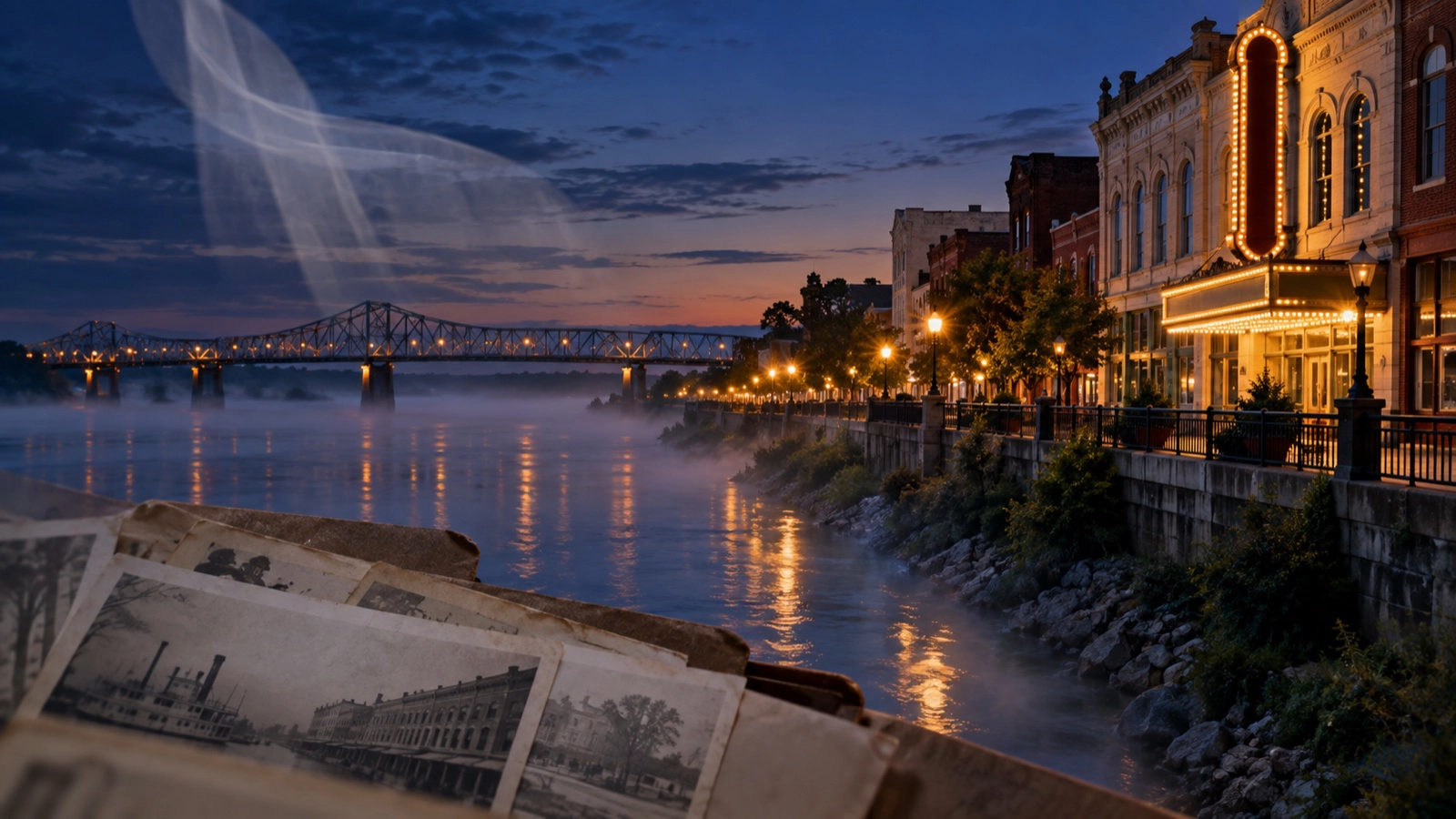
RiverPark Center has operated on the Ohio River since 1992. A tourism account attributes to the building a story about a dripping woman in white walking toward the river and links her to an alleged 1927 death. The story is specific enough to investigate, but the date and death require a contemporary newspaper, coroner record, or other primary source before they can be stated as history.
The center’s documented opening date also creates a useful question: is the story attached to the modern venue, an earlier structure on or near the site, or the riverfront more generally? Without that distinction, a dramatic event can be assigned to the wrong building.
The Turley building and theater stories
Visit Owensboro identifies the Turley building as an 1873 structure and reports staff descriptions of paranormal activity. Theater Workshop of Owensboro and other performance spaces also collect the familiar theater motifs: footsteps after closing, voices, shadows, and props or doors moving. These accounts are best attributed to the staff member, tour, or publication that recorded them.
Performance buildings generate stories easily. They contain lighting systems, catwalks, curtains, backstage passages, long periods of quiet, and generations of people who care deeply about the place. That setting explains why a story persists without proving or disproving anyone’s experience.
Keep the histories distinct
Owensboro also has folklore linked to Wilson’s Ferry and a documented history of racial violence. Those subjects receive separate treatment in Kantuckee’s Richard May and Wilson’s Ferry article. They should not be folded casually into a downtown entertainment list.
Visit venues only during public hours, performances, or authorized tours. Do not approach upper-floor residences or employee areas because a tour story identifies a window, stair, or room. For research, compare the tourism version with Daviess County Public Library newspapers, city directories, building records, and interviews conducted with permission.
Sources and further reading
About the Author: Kantuckee


