
Morehead State’s Nunn Hall Legend: Penelope, Records, and Campus Memory
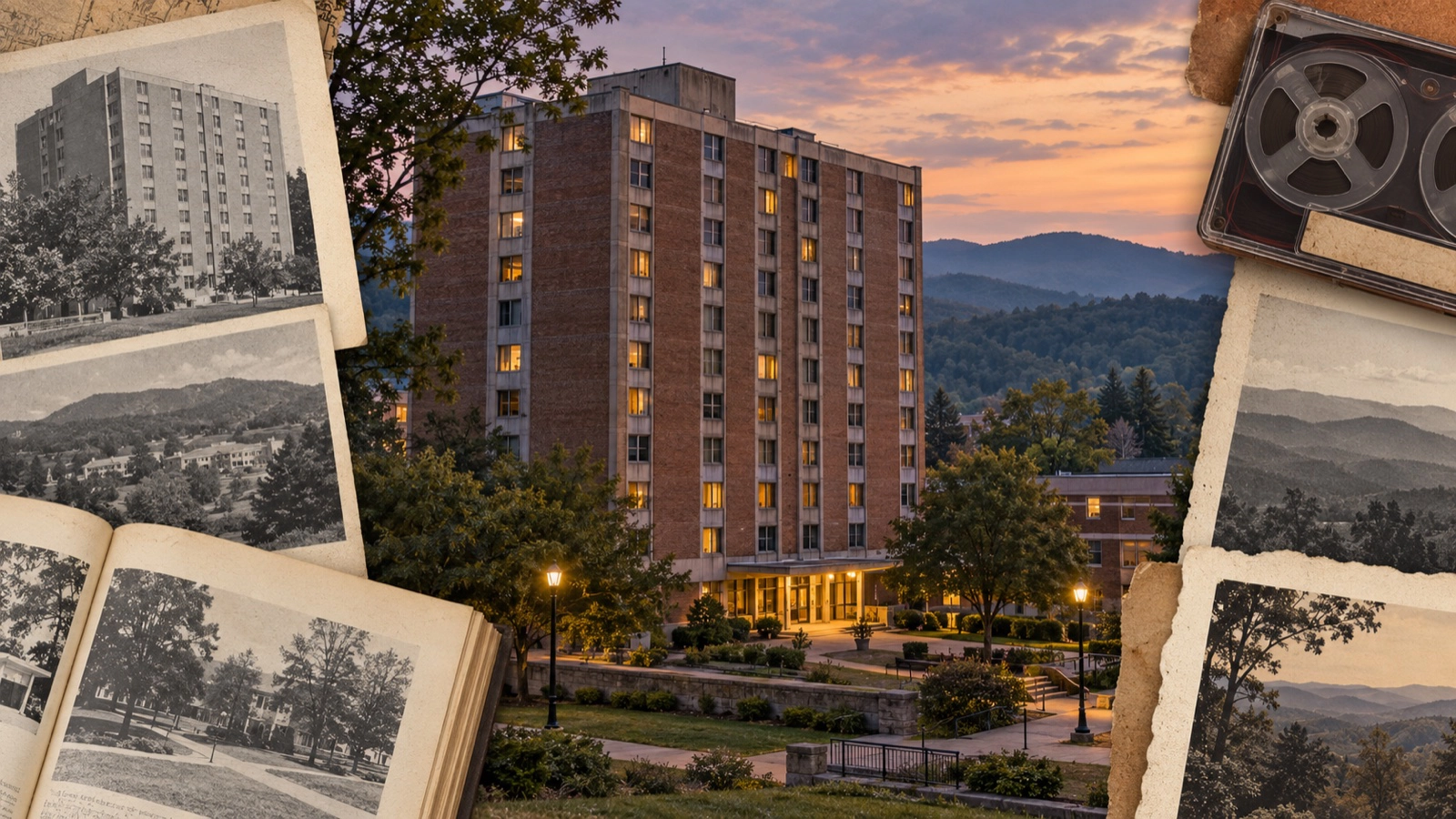
Morehead State University’s best-known campus ghost is usually called Penelope. Students place her in Nunn Hall, where elevators, lights, moved objects, cold areas, and a presence on the upper floors become evidence each new class can retell. The building is real and well documented. Penelope’s biography is not.
That gap is the heart of the legend. The story has stable locations and recurring events, but the reason given for Penelope’s death changes from version to version.
Nunn Hall before Penelope
Morehead State’s digital archive contains photographs of Nunn Hall and an audio recording from its November 8, 1969 dedication. Those institutional records give the building a firm place in campus history. They do not mention a ghost or a student named Penelope.
That distinction is useful. A university archive can establish when a building existed, how it was used, and what it looked like. It cannot automatically settle a story that students may have transmitted in conversation for years before anyone published it.
The Penelope variants
In one current version, Penelope was isolated or depressed. In another, her parents rejected her boyfriend or a pregnancy, and she jumped from an upper floor. The Rowan County Public Library’s local-story project preserves both versions and openly says that nobody knows the backstory for certain. The page is evidence of the legend as told, not a death certificate.
A 2015 article in MSU’s student newspaper, The Trail Blazer, interviewed residents about the Nunn Hall reputation. Later summaries of that article describe reports of lights switching, objects moving, unusual elevator behavior, and a sensed presence on the seventh or ninth floor. Those are attributed experiences. They do not verify the proposed identity or cause of death.
Some later websites try to connect Penelope to a real student death. That identification should not be repeated as fact without a contemporary news report, university record, death certificate, or family-approved account that establishes the connection. A similar date or location is not enough, and a real person should not be made into a ghost character simply because the details appear to fit.
Why residence-hall legends spread
Campus legends travel efficiently because the setting continually renews its audience. Older students tell newer residents which floor to watch, which elevator behaves strangely, and what happened to someone who lived there before. Ordinary building behavior—pipes, doors, electrical controls, elevators, heating zones, and sound moving through concrete corridors—gives the story new incidents.
The legend also gives a large institutional building a personality. Penelope becomes a way to talk about loneliness, relationships, academic pressure, and the unsettling experience of living among strangers. Those social functions remain meaningful even when the biographical claim cannot be documented.
Other Morehead campus stories
The video and later paranormal lists also attach stories to Button Auditorium and Butler Hall. Button stories have included a portrait that appears to bleed and an alleged fatal fall; Butler stories center on sounds and electronics. Morehead State’s archives document Button Auditorium, historic photographs, events, and artwork, but the sources reviewed for this article did not produce a named portrait, victim, date, or contemporary report supporting those dramatic backstories.
That places them in a weaker evidence category than the Penelope tradition. They may be campus stories, but their origin and stable variants still need documentation.
How to engage without invading student space
Nunn Hall is a residence hall, not a public paranormal attraction. Do not enter residential floors without authorization, follow students, photograph room numbers, test elevators for thrills, or interfere with doors and lights. Campus visitors should follow current university parking, building-access, and guest rules.
The responsible research route is the archive: dated student-newspaper issues, yearbooks, building files, oral-history interviews with consent, and contemporary local newspapers. It is possible to preserve Penelope as a living campus legend without assigning a real student a private or unsupported tragedy.
Sources and further reading
- Morehead State University ScholarWorks: WMKY audio recordings, including the 1969 Nunn Hall dedication
- Morehead State University ScholarWorks: Nunn Hall historic image
- The Trail Blazer: 2015 Nunn Hall legend article
- Rowan County Public Library: “Grave Sights” local-story project
- Morehead State University Art Collection
About the Author: Kantuckee


