
Kentucky Bigfoot Stories: Reports, Evidence, and Folklore
Kentucky’s Bigfoot stories do not form one continuous case file. They are a collection of newspaper reports, family memories, roadside glimpses, night sounds, and later investigator interviews. The recurring figure is tall, upright, heavily built, and covered with dark or reddish hair. The details are remarkably stable; the evidence is not.
A modern Kentucky report trail
One of the better-dated northern Kentucky traditions concerns Boone County in 1980. A private report archive cites two March–April issues of The Kentucky Post describing excitement and a police inquiry after large, humanlike figures were reported. Later witness interviews attached a separate 1983 River Road encounter to the same regional tradition. The archive preserves useful names, dates, and source leads, but it is maintained by Bigfoot investigators rather than a wildlife agency; the newspaper issues should remain the evidentiary starting point.
Contemporary report databases add accounts from the Daniel Boone National Forest, Red River Gorge, and rural counties across the state. They are evidence that people tell the story, not proof that an unknown primate lives in Kentucky. Reports collected years later are especially vulnerable to memory changes and influence from television, podcasts, and other sightings.
What a report can establish
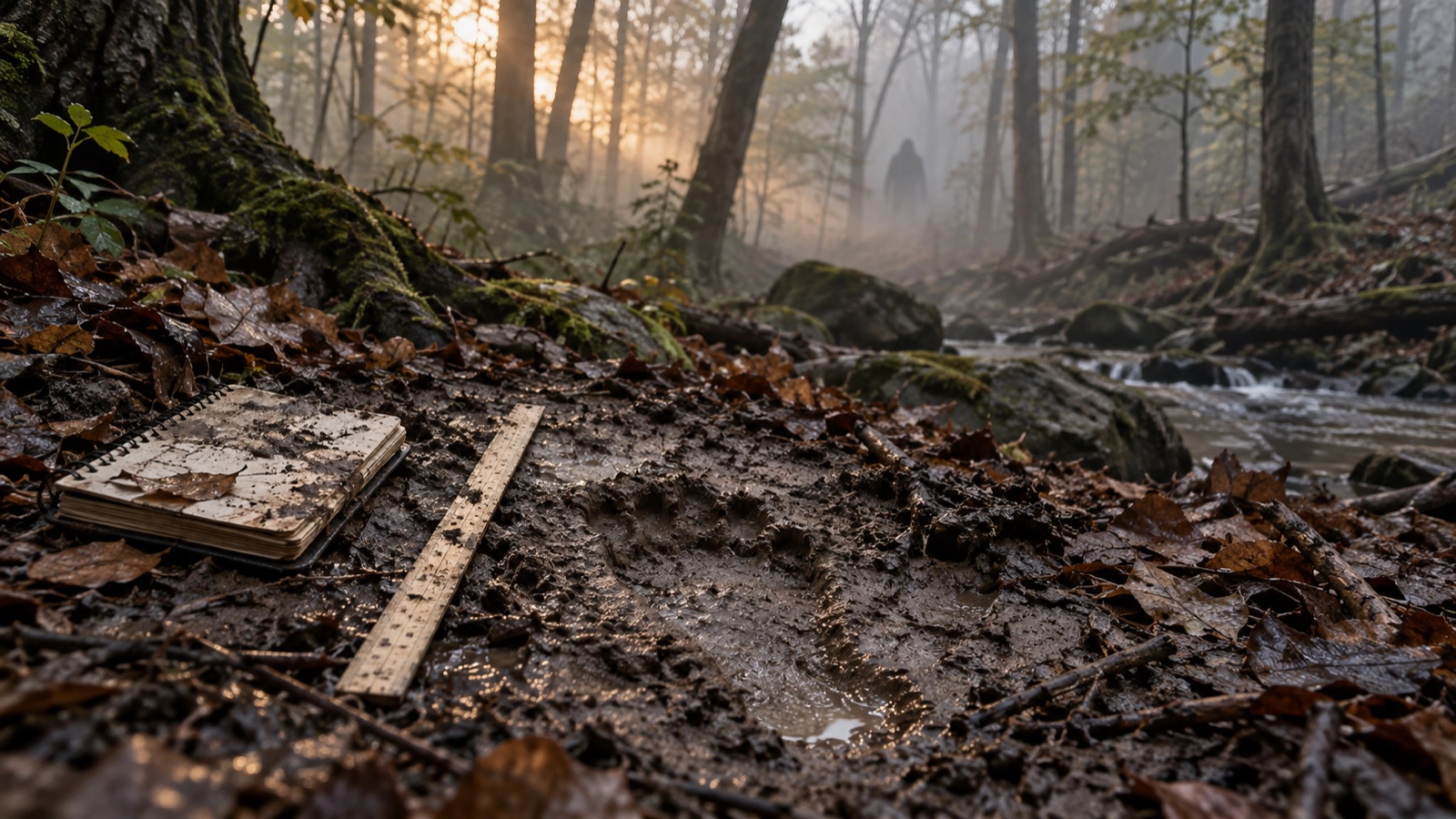
A useful encounter record identifies the date, approximate public location, light and weather, distance, duration, witnesses, and what happened before and after the sighting. An original photograph should retain its metadata and uncropped file. A track needs a scale, several angles, the surrounding trackway, and the soil or mud conditions. A single dramatic footprint can be made, misread, or enlarged as its edges collapse.
Known animals deserve comparison before a new species is proposed. Kentucky has black bears, coyotes, bobcats, deer, raccoons, and large birds whose posture, calls, eye shine, or partial silhouette can surprise an observer. Distance in woods is difficult to judge, and sound travels unpredictably through hollows. Those explanations do not prove that every witness was mistaken; they show why testimony alone cannot establish a breeding population.
Why the legend lasts
Bigfoot gives Kentucky’s forests a figure that is almost human but always just beyond identification. The story also rewards local knowledge: the person who knows the old road, creek crossing, or ridge becomes the guide. Each new recording can be folded into the tradition because ambiguity is part of the appeal.
Do not bait wildlife, broadcast calls, leave established routes, or enter private land to test a story. Report unusual wildlife to the Kentucky Department of Fish and Wildlife Resources with the same precise notes you would use for any rare observation.
Sources and further reading




About the Author: Kantuckee


